HomeCase StudiesChicago City Soccer Club

Case Study · Chicago City Soccer Club

Five Games
In Five Days.
They Didn’t Fade.


How the 2012 Boys Academy trained the mental side of performance with HeadCoach, and what their coach saw when the load got real.

86%
Squad signed up24 of 28 athletes created an account.
50%
Sustained the habitChecked in across 8+ separate weeks.
7 of 8
Skills self-rated higherAthlete self-assessment, first check to latest.
Trusted by
Chicago City Soccer ClubPohaku Volleyball ClubLondon Toronto FCTSS RoversCoastal FCParis FC

The Problem

The Mental Side Got
A Team Talk, Not A Plan

Every competitive program trains the body every day. The mental side usually gets a team talk and hope.

Before HeadCoach, the 2012 Boys Academy at Chicago City Soccer Club trained it the same way. Not at all.

We wouldn't explicitly address the mental side of performance for this group.

Jonathon O'Neill

Head Coach, Chicago City Soccer Club

What They Did

A Daily Habit, Built
Into How The Squad
Turns Up

Each athlete does a short daily check-in and follows a mental skills program set to their own results. Staff see squad-level engagement and program data, never private athlete data.

This was a first run over a compressed window. A few weeks of onboarding, the end of the season, a break, then a five-day tournament. The habit still took hold.

Daily Check-In

Each athlete logs how they are before and after the day. Two to three minutes on their phone.

Their Own Program

A mental skills program set to the athlete’s own assessment results, not a single plan pushed to the whole squad.

Habits That Repeat

The skill is reinforced through habit tracking, so it carries between sessions instead of resetting each week.

Nothing Asked Of Staff

Athletes self-onboard and the program delivers itself. Coaching staff recommend it and get on with coaching.

What The Coach Saw

Four Things Changed
Before The Scoreline Did

Readiness Held When A Hard Week Should Have Broken It

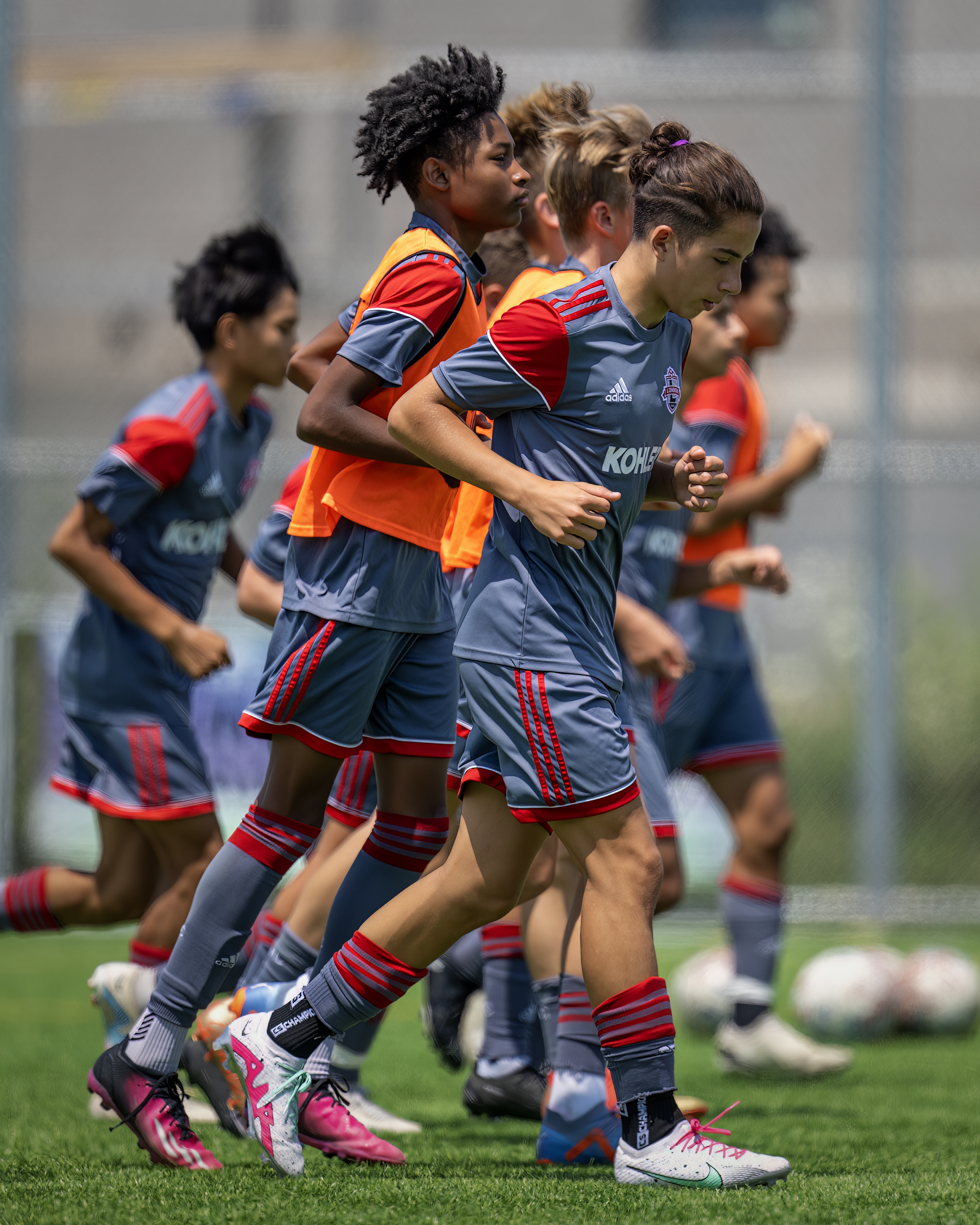
The clearest sign came at the tournament. Five games in five days, the kind of week that usually leaves a youth squad flat by the final whistle.

Managing your own energy across a hard week is a pre-condition for performing. It is what a daily readiness habit is meant to build, and the coach watched it hold under real load.

They didn't drop in freshness and tiredness as much as you'd expect. Usually on day five you'd see a lot of tired players. There wasn't a big drop-off. They managed themselves well.

Jonathon O'Neill

Head Coach, Chicago City Soccer Club

The Athletes Got More Self-Aware

For players this age, that is the change that comes first, and it is the one the coach noticed.

What it's helped the players do is become conscious of it, more self-aware. Given their age, that's a big one.

Jonathon O'Neill

Head Coach, Chicago City Soccer Club

They Started To Speak Up

The habit changed how the squad communicates. Players raised things they would have kept quiet before. That feeds the team, not just the individual.

Players come and speak up in ways they maybe wouldn't have before.

Jonathon O'Neill

Head Coach, Chicago City Soccer Club

Some Kept Going On Their Own

A few athletes check in without being told. One player who has since left the club still checks in, and still sends feedback on how it helps him.

Adoption

They Used It, And It Cost
The Coach Almost Nothing

86%
Of The Squad Signed Up

24 of 28 athletes created an account and completed their first assessment.

50%
Checked In Across 8+ Weeks

Half the squad kept the habit going across eight or more separate weeks, not eight consecutive days.

Minutes
Of Coach Time A Week

No dashboard to run, no data to review, no session to plan. The program delivers itself.

Week-to-week use rises and falls with the competitive calendar rather than a flat daily line. Measured from HeadCoach program data.

What The Athletes Report

7 Of 8 Skills Up,
On The Athletes’
Own Read

On the in-app assessment, the squad rated themselves higher across 7 of the eight mental skills between their first and latest check. Confidence and Resilience showed the largest gains.

Team averages, in-app assessment. About half the squad has a second assessment so far. This is the athletes’ own rating, so we treat it as a signal, not proof.

My players are saying they feel more confident, so I'll take their word for it.

Jonathon O'Neill

Head Coach, Chicago City Soccer Club

SkillSelf-Rated Change
Confidence
+10.9%
Resilience
+8.8%
Self-Awareness
+7.7%
Self-Control
+6.8%
Focus
+3.8%
Competitive Drive
+2.8%
Teamwork
+2.8%
Optimism
-2.1%

The Honest Part

It Hasn’t Shown Up In
Results Yet, And
Here’s Why

The coach hasn’t seen this land in match outcomes, and he’ll tell you the reason. The run was short, broken by the off-season, and left to each player on their own.

Mental habits work like any other part of a program. They build over a season, and they show faster when a whole squad trains one skill at a time. That is the next step for this group, and it is how we would set up your program from day one.

It's like any habit. It takes time, and the later you start, the later you see the outcome. It has to be part of the program. And it doesn't cost me much time at all.

Jonathon O'Neill

Head Coach, Chicago City Soccer Club

It Has To Be Part
Of The Program.

Start coaching them.